Your DATA is
telling everything.
Nobody is listening.
We gather it. We converge it. We read it through every lens.
We deliver what it means.

Three things that are true
right now in your organization.
01
You pay for physical and cyber security tools every month.
Cameras. Sensors. Badge readers. Firewalls. SIEM. Endpoint detection. IoT infrastructure. The bills arrive. The protection exists. But protection is only part of what you are paying for.
02
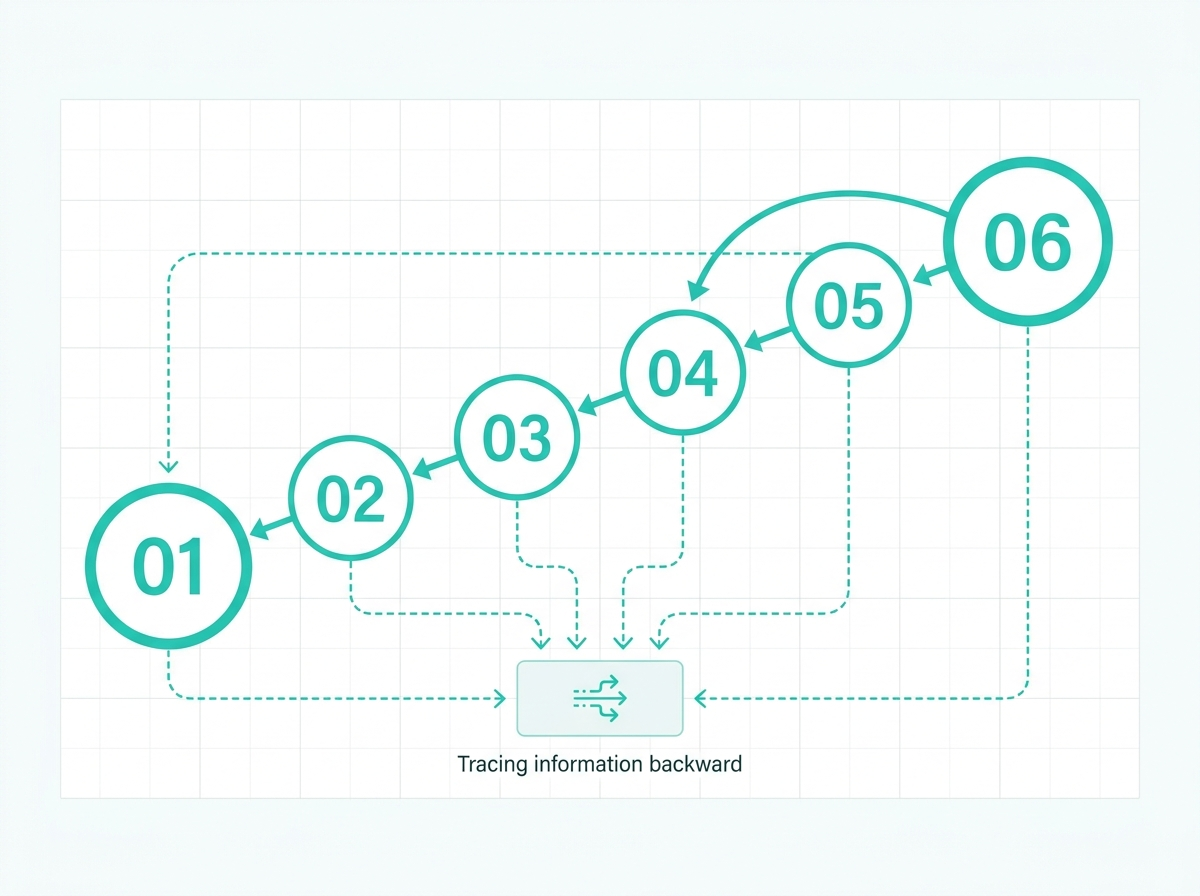
The data they generate passes through stages — and at every stage, something is lost.
Created. Transmitted. Transformed. Stored. Consumed. Acted upon. Retained. Deleted. At every point: missed, ignored, disconnected, untrusted, unused, or misclassified.
03
That data contains intelligence but your business cannot currently see.
Not just security risk. Operational inefficiency. Financial exposure. Governance gaps. Insurance opportunities. HR signals. Compliance findings. Business intelligence. All from the same data. All invisible.
Your data is everywhere.
But nobody's reading it.
You installed security cameras because insurance discounts made sense. You deployed security tools because a breach would close you. Now both systems run 24/7, capturing everything. Yet the intelligence they contain remains invisible — not because the data doesn't exist, but because it doesn't speak across systems or to the people who need to hear it.
The Supervisor's Eye
Operational Blindness
A customer walks the same aisle for 8 minutes and leaves. Your POS system logs an abandoned cart. Your camera captured the behavior. Your network logs show the employee at that location was handling a system that crashed. Three data streams. Zero connection. The bottleneck remains invisible.
The Police's Eye
Security Fragmentation
Your firewall blocks a suspicious login attempt at 2:47 AM. Your camera shows nobody was at the desk. Your network logs show high data transfer volume that night. Your audit logs show credential changes. But each system sits alone. Was it compromised? Remote attack? Insider threat? The pattern is invisible.
The Business's Eye
Hidden Opportunities
Your team's productivity dropped 15% last week. Your network shows increased app crashes. Your time-tracking shows they're spending hours on manual processes. Your camera shows crowded desks during quiet hours. The real opportunity — process automation that would free 10 hours per week per person — is invisible because the signals never converge.
The Compliance Eye
Risk You Can't Prove You've Reduced
You invested in cybersecurity and cameras to meet regulatory requirements. You have logs. You have footage. You can prove you have tools. But you can't prove you're actually secure, because you can't connect the evidence. An auditor asks, "Do you actually know if this threat would have been detected?" You can't answer.
The gap isn't a technology problem. You have the right tools. The gap is convergence — the ability to read your physical and cyber data together, through multiple lenses simultaneously, and see what was always there. That's where intelligence lives. That's where we operate.
Proof of Concept
Before investing in a full data convergence program, see the actual intelligence hidden in your systems. We conduct a structured, PoC (Proof of Concept) to demonstrate what's possible with your data.
What We Deliver in Your PoC:
- ✓Comprehensive convergence analysis of your physical and cyber data
- ✓Intelligence findings from multiple simultaneous analytical perspectives
- ✓Cross-domain pattern detection and correlation analysis
- ✓Detailed report with observations, patterns found, and business impact mapped
- ✓Clear recommendations on next steps and full program approach
- ✓Estimated costs and timeline for complete data convergence implementation
Investment: $25,000 - $35,000 | Timeline: 4-6 weeks | Commitment: See real findings from your data. Based on assessment results, you decide what's next — full implementation, phased approach, or internal execution. No pressure. Clear choices.
Our 4-6 week assessment process delivers validated findings and a clear roadmap. We conduct a comprehensive convergence analysis of your data, revealing patterns and intelligence your current systems miss. You get observations, patterns, business impact, and recommendations — everything you need to decide what's next.
Ready to see what your data is telling you?
Why We Need PoC (Proof of Concept)
Why we need PoC
Before making significant investments in data convergence and intelligence capabilities, organizations need to validate that the methodology works with their specific data, infrastructure, and operational context. A PoC demonstrates real-world value with zero risk.
Validate the benefits before investments
See actual intelligence findings from your data before committing to a full engagement. The PoC proves the methodology is not theoretical — it works with your physical and cyber data, your systems, your gaps.
Understand the Cost estimates
Based on PoC scope and findings, we can accurately estimate the cost and timeline for a full data convergence initiative. You make investment decisions with real data, not assumptions.
Read the same data
through infinite eyes.
Your data contains patterns that remain invisible when read from a single perspective. Your security team sees one picture. Your operations team sees another. Your compliance officer sees a third. Each is correct. Each is incomplete.
Our framework applies simultaneous analytical perspectives — each asking different questions of the same data, each revealing what others miss. Not sequential analysis where findings pile up in reports. Not departmental silos where intelligence dies in isolation. True convergence: every angle examined at once.
The questions below represent the different angles through which intelligence emerges. When all of them read your data simultaneously, the picture becomes clear.
Security & Risk
“What can go wrong?”
Governance & Assurance
“Are we doing what we are supposed to do?”
Operations & Performance
“Can this work better?”
Business & Strategy
“What business value or impact exists?”
Data & Human Factors
“What does the data really mean and how can intelligence be improved?”
When you read data this way — simultaneously, from every relevant angle — patterns emerge that were always there. Risks no single tool detected. Opportunities no individual team saw. The intelligence that was hiding in plain sight.
No single system, SIEM, or internal team reads your data this way. This framework sits above all of them — delivering intelligence that reveals what each organization is missing.
What a blind spot looks like
when you finally see it.
This is not hypothetical. This type of finding appears in organizations with mature security infrastructure — where each individual system is working exactly as designed. The intelligence failure is systemic, not technical.
Credential Activity During Approved Leave
An employee is on approved annual leave — recorded in the HR system, dates confirmed, line manager notified. Duration: two weeks. Nothing unusual about the request.
Leave approved. Dates recorded. Status: on leave. No further action required.
No entry events during leave period. Appears inactive. No flags raised.
Two sessions initiated during leave period. Valid credentials. Access granted.
Files accessed. Documents opened. Activity within normal behavioural range.
No alert generated. Access patterns within threshold. No anomaly detected.
No system correlated the HR leave record with the active digital sessions. A legitimate emergency access and a malicious credential theft look identical from any single-system view. Both use valid credentials. Both access expected files. Neither triggers an alert. The systems were not designed to speak to each other. They still are not.
A converged query across HR and access systems surfaces the conflict automatically: leave status active + digital access active = requires explanation. Escalation to manager and HR within minutes. Confirmation or denial. Audit record created regardless of outcome.
If malicious: a breach went undetected during the highest-risk window — when the legitimate user cannot deny or confirm access. If legitimate: no audit record exists to prove authorization was given. Either way, the organization is exposed and does not know it.
The infrastructure behind
the intelligence.
Machine Learning
Pattern detection across converged physical and cyber data at scale. Anomaly identification across behavioural, temporal, and access dimensions simultaneously — not separately.
Intelligence AI
The engine that reads converged data from every relevant analytical angle. Cross-domain correlation across physical, cyber, IoT, and GRC sources — surfacing findings that no single system, SIEM, or internal team can see in isolation.
Data Engineering
Pipelines that gather, transform, and converge data from physical, cyber, IoT, and GRC sources into a single queryable foundation. Built for scale, auditability, and cross-source correlation — turning fragmented signals into structured intelligence.
Three kinds of people
who need to see this.
Business Owners
You are paying for physical and cyber security tools every month. The contracts are signed. The technology is running. But what you receive back is protection — not intelligence. You are paying for more than you are getting.
ROI analysis of your security spend. Business intelligence embedded in your existing data. A picture of what your tools are generating that nobody is reading.
Operations & Risk Leaders
You sit on data you cannot read. Your systems generate intelligence across physical and digital environments that has never been correlated. You know the data exists. You do not have the mandate or methodology to converge it.
A converged view across every system in your environment. Findings structured for operational response, not technical review.
Compliance & Audit Managers
You need evidence, not assumptions. Your audit processes rely on what systems report about themselves. You need independent analysis of what the data actually shows — before an external auditor does it for you.
Pre-audit intelligence findings, control gap evidence, and documented cross-system correlation you can present before anyone asks.
Expertise built
before it is sold.
This consultancy builds expertise before selling it. Every engagement is documented. Every finding is structured for publication. Case studies prove the methodology before any client is asked to trust it.
We do not sell a product. We do not market a platform. We establish credibility through published research and demonstrated findings — then offer that credibility to organizations that need it. Expertise led. Research backed. Case study proven.
Every engagement follows the same structured approach: scope, gather, converge, deliver. No exceptions. No shortcuts. Documented at every stage.
Findings from each engagement are anonymised and contribute to published research. The methodology improves with every data source we read.
Every engagement produces a documented case study — available before a client commits to engagement. The proof of method precedes the ask.
One conversation.
No commitment.
Let’s look at your data together. Tell us what security systems you run. We will tell you what you are not seeing.
No sales pitch. No platform demo. No pricing discussion.
One structured conversation about what your data is generating and what it is not being used for.